Organizes all 12 keys by relationship — adjacent keys share 6 of 7 notes.
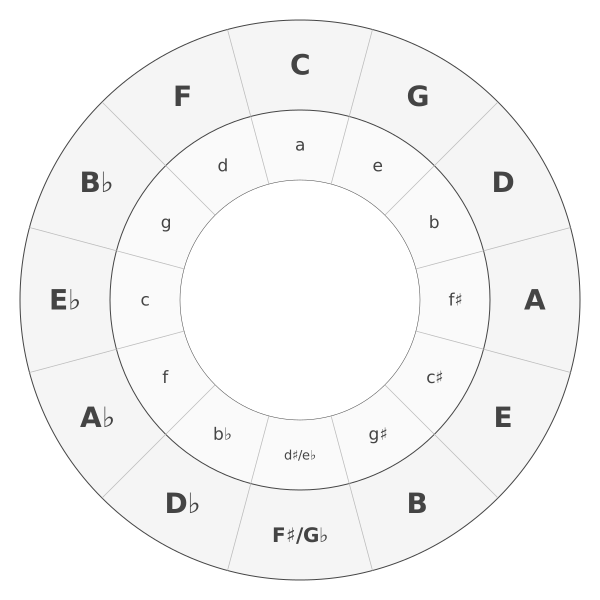
Moving clockwise adds one sharp (at the 7th degree). Moving counter-clockwise adds one flat (at the 4th degree). Keys a fifth apart differ by only one note and harmonize easily.
- Clockwise (5ths): C - G - D - A - E - B - F# - C# - Ab - Eb - Bb - F
- Counter-clockwise (4ths): C - F - Bb - Eb - Ab - Db - Gb - B - E - A - D - G
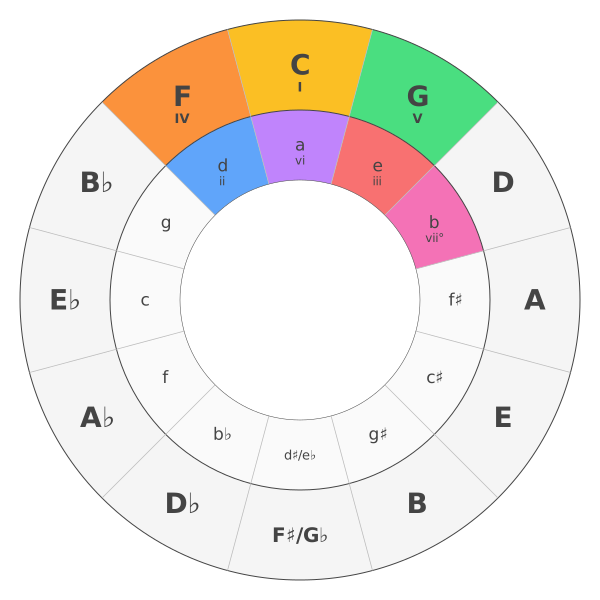
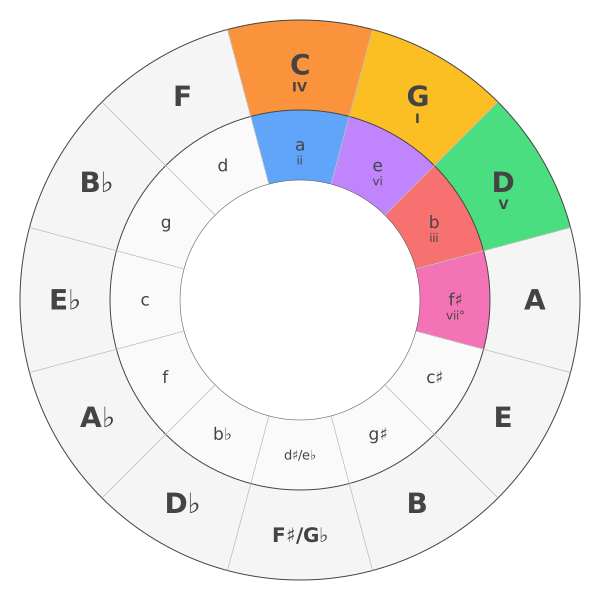
Observe the Key of C Major in the diagram below. Notice the relationship to C and its neighboring notes. We can apply this same layout to gain insights into any key. For example, if we cycle a 5th clockwise, the diagram represents the key of G major.
| C Major | G Major |
|---|---|
 |  |
See Interactive Circle of Fifths to expore.
Circle of 4ths on the Fretboard:
Guitars are typically tuned by 4ths.

- Adjacent strings are separated by a 4th
- Moving in the opposite direction is a given note’s 5th, e.g
A -> E
- Moving in the opposite direction is a given note’s 5th, e.g
- Moving diagonally up one string and back one fret (descending) also lands a 4th, e.g.
F -> Bb - B string is tuned a Major 3rd above the G string, thus shifting the G string’s 4th down a fret, e.g.
A -> D
Why Use it
Eventually the fretboard is what you know best. The circle can act as verification tool while you learn.
- Identify key signatures
- Starting from the Key of C Major (or the key of A on the minor circle of 5ths) and going clockwise, each successive key gets an additional sharp at the 7th scale degree. For example, the key of C has no sharps, while the key of G (the key one fifth apart from C in a clockwise direction) has one sharp at the 7th scale degree. Similarly, going counter-clockwise, each successive key gets an additional flat at the 4th scale degree.
- Understand Chord Progressions
- Verify Intervals in a given key
- Find related keys
Exercises
- Play each note on a single string moving in 4ths
- Play each note on a single string moving in 5ths
- Name the key one 5th above/below any given key without looking